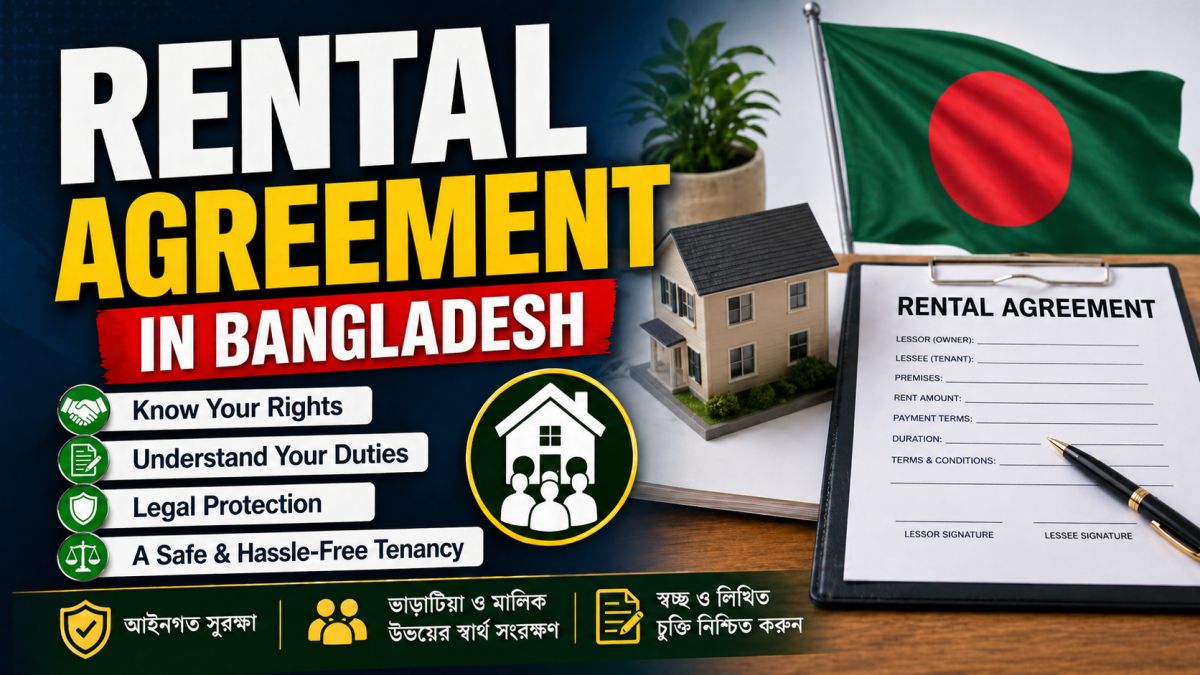
In the past, many rentals in Bangladesh relied on verbal agreements. However, in 2026, a written rental agreement is a legal necessity for your protection. Whether you are a landlord or a tenant, understanding the clauses in your contract—especially under new regulatory guidelines—can prevent costly disputes.
1. Key Regulations for 2026
Recent directives from authorities like the Dhaka North City Corporation (DNCC), based on the House Rent Control Act, have introduced strict rules to balance the landlord-tenant relationship:
- Rent Hikes: Landlords are generally prohibited from increasing rent more than once every two years. Furthermore, any annual increase must not exceed 15% of the property's market value.
- Advance Payments: Demanding more than one to three months’ rent as an advance or security deposit is now strictly limited to prevent financial strain on tenants.
- Access & Security: For safety reasons (including fire and emergency risks), landlords must provide tenants with keys to the main gate and the rooftop.
- Payment Deadlines: Tenants are typically expected to pay rent by the 10th of each month, and landlords are required to provide a signed written receipt.
2. Essential Clauses for Every Agreement
Verify that these specific details are included before you sign any document:
- Full Identification: The agreement must include the National ID (NID) numbers and permanent addresses of both parties. This is vital for the mandatory police verification process in major cities.
- Security Deposit Breakdown: Clearly state the exact amount and the conditions for its refund (e.g., deducting for unpaid bills or damages beyond normal wear and tear).
- Utility Responsibilities: Specify who is responsible for electricity (prepaid or postpaid), gas, water, and internet fees, as well as the building’s monthly "service charge."
- Maintenance Rules: Define who handles repairs. Usually, the tenant manages minor daily maintenance, while the landlord is responsible for major structural repairs (like plumbing or electrical wiring).
3. Termination and Notice Periods
To avoid sudden evictions or unexpected vacancies, your agreement should clearly outline:
- Notice Period: For residential properties, a two-month written notice is the standard requirement for either party to terminate the contract.
- Eviction Protocol: Under current guidelines, a landlord cannot carry out direct eviction for non-payment without first providing a verbal warning followed by a formal two-month written notice.
4. Legal Validity and Stamp Duty
To make your agreement legally binding in Bangladesh, it must meet specific formal requirements:
- Stamp Paper: The agreement should be printed on non-judicial stamp paper. For most residential agreements, a 300 BDT stamp is the standard requirement to ensure legal validity.
- Witnesses: At least two witnesses should sign the document to verify the signatures of the landlord and tenant.
- Notarization: While many residential leases are for 11 months to avoid mandatory registration, having the document notarized by a Notary Public adds a necessary layer of legal weight in case of future disputes.
5. Practical Move-In Tips
- Photo Documentation: Take clear photos of the flat’s current condition before moving in and share them with the landlord to avoid disputes over the security deposit later.
- Inventory List: If the flat is furnished or includes appliances (like geysers or fans), list them in an annex to the agreement to confirm their condition and ownership.
A well-drafted rental agreement is the foundation of a stress-free home. For more templates and verified listings, stay connected with Varadibo.com—Bangladesh's most trusted rental marketplace.