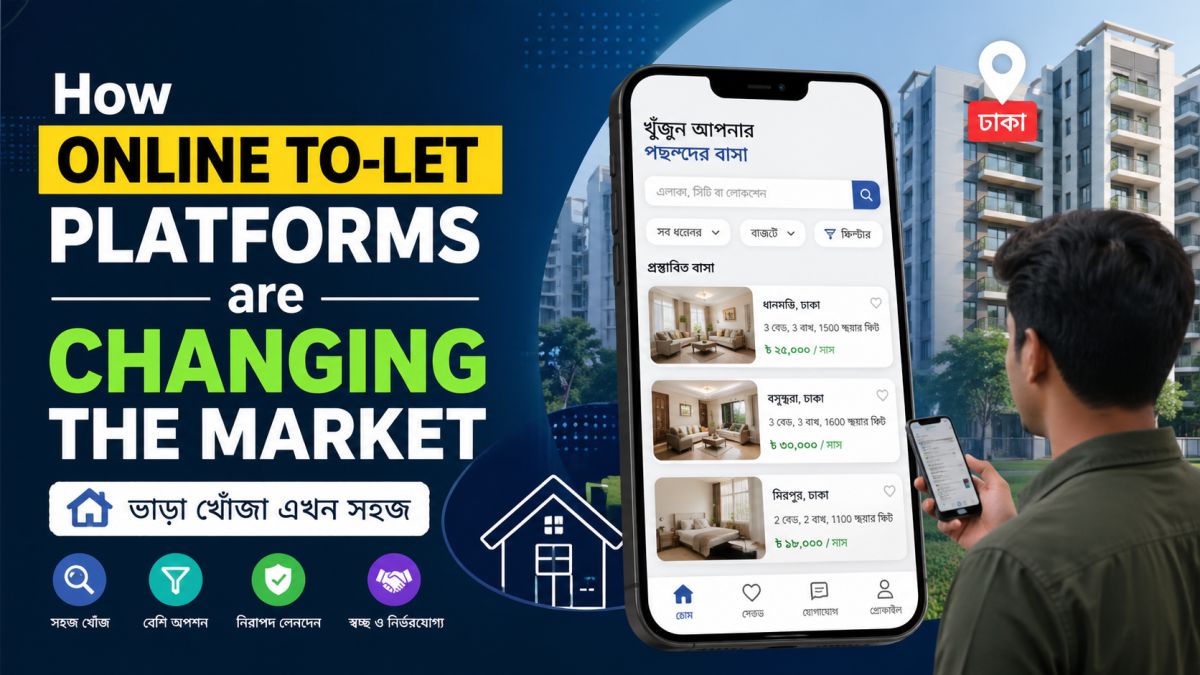
In 2026, the traditional "To-Let" sign hanging from a balcony is becoming a rarity in Bangladesh’s urban centers. The rental market has undergone a digital revolution, driven by platforms like Varadibo.com. This shift isn't just about moving listings from paper to screens; it is fundamentally changing the speed, safety, and transparency of the entire rental ecosystem.
1. The Death of the "Information Gap"
Historically, finding a flat required physically walking through neighborhoods or relying on informal middle-men (brokers) who often provided biased information. Online platforms have democratized this data.
- Instant Comparison: In seconds, a tenant can compare rents across different blocks in Mirpur or sectors in Uttara. This has forced landlords to set more competitive, market-driven prices.
- Detailed Insights: Listings now include specific details—such as the exact floor, orientation (south-facing), and utility types (prepaid vs. postpaid)—that were previously only discoverable through a physical visit.
2. Verification: The New Standard for Trust
Fraud was a major deterrent in the old rental market. Online platforms in 2026 have introduced sophisticated layers of security that protect both parties.
- NID-Verified Profiles: Platforms now often require landlords and tenants to verify their National IDs. This creates a "digital footprint" that discourages scammers.
- Verified Listings: Many platforms send agents to physically verify a property's existence and condition before it receives a "Verified" badge, virtually eliminating the "fake listing" problem.
3. Virtualized Viewings and AI Efficiency
Technology has significantly reduced the time it takes to close a deal. What used to take weeks now often takes days.
- 360° Virtual Tours: Using VR and high-definition video walkthroughs, tenants can "tour" 10 properties from their smartphone, only visiting the top two in person. This is a massive time-saver in Dhaka’s traffic.
- AI Matching: In 2026, platforms use AI algorithms to suggest homes based on a member's commute to work (via the Metro Rail), budget, and lifestyle preferences (e.g., "bachelor-friendly" or "pet-friendly").
4. Formalizing the Landlord-Tenant Relationship
Online platforms are acting as a catalyst for professionalizing the market, aligning it with the latest **DNCC (Dhaka North City Corporation)** guidelines.
- Standardized Agreements: Many platforms now offer digital lease templates that automatically include 2026 legal requirements, such as the 3-month advance cap and the 2-year rent-fix rule.
- Digital Records: By keeping communication and payment records on a centralized platform, disputes over "security deposit returns" or "unpaid bills" are much easier to resolve with clear evidence.
5. Empowerment of Secondary Cities
Digitization has allowed the rental market to expand beyond Dhaka. Owners in cities like **Comilla, Bogra, and Sylhet** can now reach a national audience of professionals and students who are relocating, making the regional market more liquid and lucrative.
Market Evolution: Traditional vs. Digital (2026)
| Feature | Traditional (Offline) | Modern (Online Platforms) |
|---|---|---|
| Search Method | Physical walking / Brokers | Mobile App / Web Search |
| Transparency | Low (Verbal claims) | High (Photos, Maps, Reviews) |
| Trust Level | Variable (Personal trust) | High (NID & Property Verification) |
| Transaction Speed | Slow (Weeks) | Fast (Hours to Days) |
The future of renting in Bangladesh is here, and it is digital. To experience the most modern, secure, and efficient way to rent, visit Varadibo.com—where we are building a better community, one verified listing at a time.